
Get SAAC & IAF accredited ISO 22000 Food Safety Management System certification from TUV United Arabia Limited Company; moreover, achieve it quickly and efficiently for all industries across Saudi Arabia.
What is ISO 22000 Food Safety Management System?
Get ISO 22000 certification in Saudi Arabia from TUV United Arabia Limited Company, a SAAC-accredited and IAF-recognized certification body. ISO 22000 is the international standard for Food Safety Management Systems (FSMS), developed by the International Organization for Standardization (ISO).and, moreover,serves as a globally trusted benchmark for consistent quality.
ISO 22000:2018 ensures production of safe and healthy food for all consumers; moreover, it helps identify food-related hazards and establish controls. In addition, it supports compliance with local and international food safety laws and regulations, and finally, it promotes continuous improvement in food processes and product quality.
In Saudi Arabia, ISO 22000 certification demonstrates your commitment to Food Safety excellence and is often a requirement for government tenders and international business partnerships.. As a result, Obtaining the certification strengthens credibility in local and global markets. Therefore, TUV United Arabia Limited Company As a SAAC-accredited certification body, issues internationally recognized certificates verified through the IAF IAFCERTSEARCH database and accepted globally
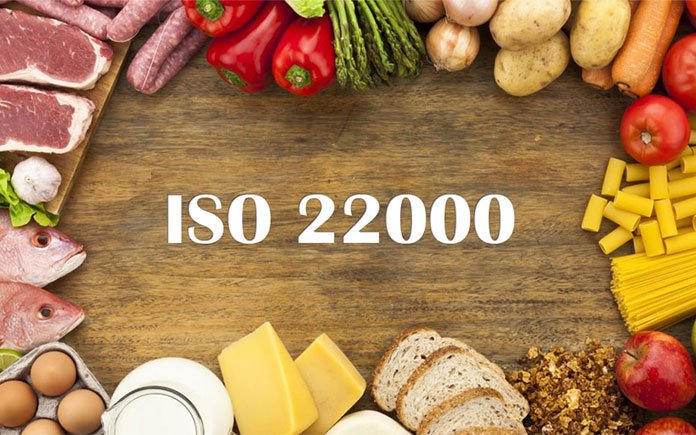
Benefits of ISO 22000 Certification for Saudi Organizations Achieving ISO 22000 certification delivers numerous competitive advantages for businesses operating in saudi arabia; moreover, it strengthens credibility and operational efficiency.
Improved Food Safety
Moreover, it helps prevent contamination and reduce food hazards across the production and supply chain.
Legal Compliance
Additionally, it ensures adherence to national and international food safety standards and regulations.
Enhanced Customer Confidence
Consequently, it helps deliver safe and high-quality food products, building trust with consumers
Reduced Losses
Furthermore, it helps minimize waste and recalls, and prevents the distribution of non-compliant products.
Market Competitiveness
Consequently, it helps gain a competitive edge by demonstrating commitment to international food safety standards.
Food Risk Management
Moreover, it helps identify hazards, assess risks, and implement effective preventive measures.
Supply Chain Efficiency
Furthermore, it helps strengthen collaboration and safety standards with suppliers and partners
Continuous Improvement
Additionally, it fosters a culture of ongoing monitoring, evaluation, and enhancement of food safety practices.
Employee Awareness and Training
Moreover, it helps improve staff knowledge and responsibility for food safety procedures.
Industries That Need ISO 22000 Certification ISO22000 certification in saudi arabia is universally applicable across all sectors; therefore, organizations from various industries can benefit from its implementation.
Food Manufacturing and Processing
such as Factories that produce meat, dairy, canned foods, snacks.
Restaurants and Catering Services
For examples Hotels, catering companies, cafés, and restaurant chains
Agriculture and Farming
such as Farms that grow crops, raise livestock, or produce raw food materials
Food Transportation and Logistics
For examples Cold chain transport, food storage warehouses, and distribution centers
Retail and Supermarkets
For examples Hypermarkets, grocery stores, and online food delivery platforms
Animal Feed Production
For examples Factories that produce feed for livestock, poultry, or aquaculture
Food Packaging and Packaging Material Manufacturers
such as Companies that produce food-safe packaging like plastic, paper, or aluminum containers
Food Ingredients Suppliers
For examples Producers of additives, preservatives, flavors, colors, and raw ingredients.
ISO 22000 Certification Structure
ISO 22000 Certification consists of ten main clauses. The first three are introductory, however, clauses 4 to 10 cover the essential requirements of a Food Safety Management System (FSMS). The standard integrates HACCP principles and Prerequisite Programs (PRPs) as core elements, following the Plan–Do–Check–Act (PDCA) cycle, therefore ensuring continuous system improvement.
Principles of HACCP (7 Principles)
Conduct Hazard Analysis
First, Identify potential food safety hazards (such as : biological, chemical, or physical) that could occur in the food production process and determine preventive measures
Determine Critical Control Points (CCPs)
Next, Identify points in the process where control is essential to prevent, eliminate, or reduce food safety hazards to acceptable levels.
Establish Critical Limits
Then, Set maximum or minimum values (for examples: temperature, time, pH, etc.) for each CCP that must be met to ensure food safety
Establish Monitoring Procedures
After that, Develop procedures to monitor CCPs through scheduled observations or measurements to ensure critical limits are maintained.
Establish Corrective Actions
Subsequently, Define actions to be taken when monitoring indicates a CCP is not under control or critical limits are exceeded.
Establish Verification Procedures
Next, Implement activities (such as : audits, testing, reviews) to verify that the HACCP system is working effectively.
Establish Documentation and Record-Keeping
Finaly, Maintain records of all procedures, monitoring activities, corrective actions, and verification to demonstrate the HACCP system's effectiveness.
Prerequisite Programs (PRPs)
General Structure of the ISO 22000 standard
Plan
Clause 4 – Context of the Organization
The organization shall identify:
- Its identity, food-related activities, and products/services.
- Interested parties and their requirements.
- Scope of the Food Safety Management System (FSMS).
- Food-related processes, and interactions within the supply chain.
Clause 5 – Leadership
Top management shall
- Demonstrate leadership and commitment to food safety.
- Establish, communicate, and maintain a clear Food Safety Policy.
- Define roles, responsibilities, and authorities.
- Define roles and responsibilities of food safety team leader
Clause 6 – Planning
The organization shall:
- Identify food safety risks and opportunities.
- Set measurable food safety objectives and plans to achieve them.
- Plan changes to the FSMS systematically to maintain effectiveness.
Clause 7 – Support
- Covers resources required to operate the system such as :
- Human resources
- Infrastructure
- Work environment
- Externally developed elements of the food safety management system
- Control of externally provided processes, products or services
- Competence and training
- Awareness sessions
- Communication such as :
- External communication
- Internal communication
- Documented information (such as procedures, forms, records)
- creation and updating
- control of documented information
Do
Clause 8 – Operation
The organization shall:
- Plan, implement, and control food production and service processes.
- Apply prerequisite programs (PRPs) to ensure hygiene, maintenance, and supplier control.
- Monitor and manage raw materials, ingredients, and products to ensure traceability.
- Prepare contingency plans for incidents, interruptions, or emergencies.
- Conduct hazard analysis, determine CCPs and OPRPs, and develop HACCP plans.
- Validate and verify control measures before and after implementation.
- Maintain updated documented HACCP/OPRP and PRP plans.
- Manage non-conforming products through correction, withdrawal, or recall if necessary.
- Ensure accurate and reliable measurement and monitoring tools.
Check
Clause 9 – Performance Evaluation
- Measure system effectiveness
- Collect and analyze data
- Planning and conduct internal audits
- Management review to assess results and make decisions
Act
Clause 10 – Improvement
- Continuous improvement
- Address non-conformities
- Implement corrective actions
- Continually update the FSMS to enhance food safety performance
TUV United Arabia Limited Company ISO 22000 Certification Process
Our streamlined process ensures you achieve ISO 22000 certification efficiently; moreover, it guarantees effectiveness throughout the process.
1- Internal Readiness Review
Firstly, Before submitting the application for ISO 22000 certification, the company performs a comprehensive internal readiness check, including a full internal audit and a management review, to verify that the Food Safety management system is effectively implemented and fully prepared for the external certification audit.
2- Application and Application Review
Secondly, We receive your application and review your organization’s scope, activities, and requirements to confirm eligibility and prepare the appropriate ISO 22000 certification pathway.
3- Program Development
Then, We establish ISO 22000 certification program, including audit duration, audit cycle, required audit activities, and resources based on your organization’s size and complexity.
4- Audit Planning
Subsequently, Our SAAC-accredited audit team prepares a detailed audit plan outlining the audit schedule, processes to be assessed, team responsibilities, and logistical arrangements to ensure a smooth audit process
5- Stage 1 Audit - Documentation Review
Then, Our SAAC-accredited auditors review your Food Safety management system documentation to ensure compliance with ISO 22000:2018 requirements and readiness for the main audit.
6- Stage 2 Audit - Certification Assessment
Next We conduct a thorough on-site audit examining implementation of Food Safety processes, evidence of continual improvement, effectiveness of the management system, and compliance with documented procedures.
7- Certificate Issuance
Finally, Upon successful completion, TUV United Arabia Limited Company issues your SAAC and IAF-accredited ISO 22000:2018 certificate, valid for three years and verifiable through IAFCERTSEARCH.
8- Ongoing Support and Surveillance
Moreover, We provide continuous support including annual surveillance audits, recertification every three years, and additional training as needed to maintain compliance.
Timeline: Complete certification in the shortest possible time from readiness to certificate issuance
Why Choose TUV United Arabia Limited Company for ISO 22000 Certification?
SAAC Accredited & IAF Recognized:
Our ISO 22000 certificates are accredited by the Saudi Accreditation Center (SAAC) and recognized by the International Accreditation Forum (IAF), ensuring global acceptance and credibility. Moreover, this guarantees internationally trusted certification
Rapid ISO 22000 Certification:
We understand the urgency of business needs. Therefore, our efficient process enables ISO 22000 certification quickly without compromising audit quality
20+ Years Combined Expertise:
Our team of experienced auditors brings over 20 years of combined experience certifying organizations across governmental, industrial, and service sectors in Saudi Arabia. Furthermore, this diverse expertise ensures reliable and professional audits.
Competitive Pricing – 20% Below Market:
We offer transparent and competitive pricing approximately 20% below market rates, thus making Food Safety certification accessible to organizations of all sizes
Comprehensive Support Beyond Certification:
We provide gap analysis, implementation guidance, staff training, and ongoing post-certification support to ensure your continued compliance and improvement. Additionally, our support helps maintain long-term system effectiveness..
Nationwide Coverage:
Based in Riyadh, we serve organizations across all regions of Saudi Arabia including Jeddah, Dammam, Khobar, Makkah, Medina, and beyond. Likewise, our services reach clients in remote areas across the Kingdom.
Frequently Asked Questions
With TUV United Arabia Limited Company, organizations can achieve ISO 22000 certification as quickly as possible; moreover, the process spans from audit readiness to certificate issuance.
Certification costs vary based on organization size, complexity, and number of sites; therefore, contact us for a customized quote. Additionally, our pricing is approximately 20% below market rates.
While not legally mandatory for all sectors, ISO 22000 is often required for government tenders, contracts; moreover, it is essential for demonstrating Food Safety commitment to customers.
ISO 22000 certificates are valid for three years; moreover, annual surveillance audits are required to maintain certification.
Absolutely. ISO 22000 is scalable and, therefore, applicable to organizations of all sizes, from small businesses to large corporations.
Yes, our certificates are SAAC-accredited and IAF-recognized; therefore, they are globally accepted and verifiable through IAFCERTSEARCH.
Explore Our Other ISO Certifications

ISO 9001 Certification in Saudi Arabia
Get SAAC & IAF accredited ISO 9001 certification from TUV United Arabia Limited Company quickly and efficiently for all industries across Saudi Arabia
ISO 14001 Certification in Saudi Arabia
Get SAAC & IAF accredited ISO 14001 certification from TUV United Arabia Limited Company quickly and efficiently for all industries across Saudi Arabia

ISO 45001 Certification in Saudi Arabia
Get SAAC & IAF accredited ISO 45001 certification from TUV United Arabia Limited Company and efficiently for all industries across Saudi Arabia

ISO 22301 Certification in Saudi Arabia
Get SAAC & IAF accredited ISO 22301 certification from TUV United Arabia Limited Company quickly and efficiently for all industries across Saudi Arabia
Ready to Get ISO 22000 Certification ? Take the first step toward Food Safety excellence and business growth with ISO 22000:2018 certification from TUV United Arabia Limited Company - Your trusted SAAC & IAF accredited certification partner
TUV United Arabia Limited Company
SAAC-accredited and IAF-recognized ISO certification body serving all regions of Saudi Arabia with fast, professional, and affordable certification services.